How Fast Access to Medical Information Impacts Patient Survival
In healthcare, having the right information is not enough it must be available at the right time. A patient's medical history, medications, allergies, laboratory results, radiology reports, and previous diagnoses can significantly influence clinical decisions, particularly during emergencies. Fast access to medical information enables healthcare professionals to make informed decisions more quickly, reduce unnecessary delays, and improve patient safety. By connecting clinical departments and centralizing healthcare data, a Hospital Information System (HIS) can help hospitals create a faster, more coordinated environment where critical information reaches the right healthcare professional when it matters most.
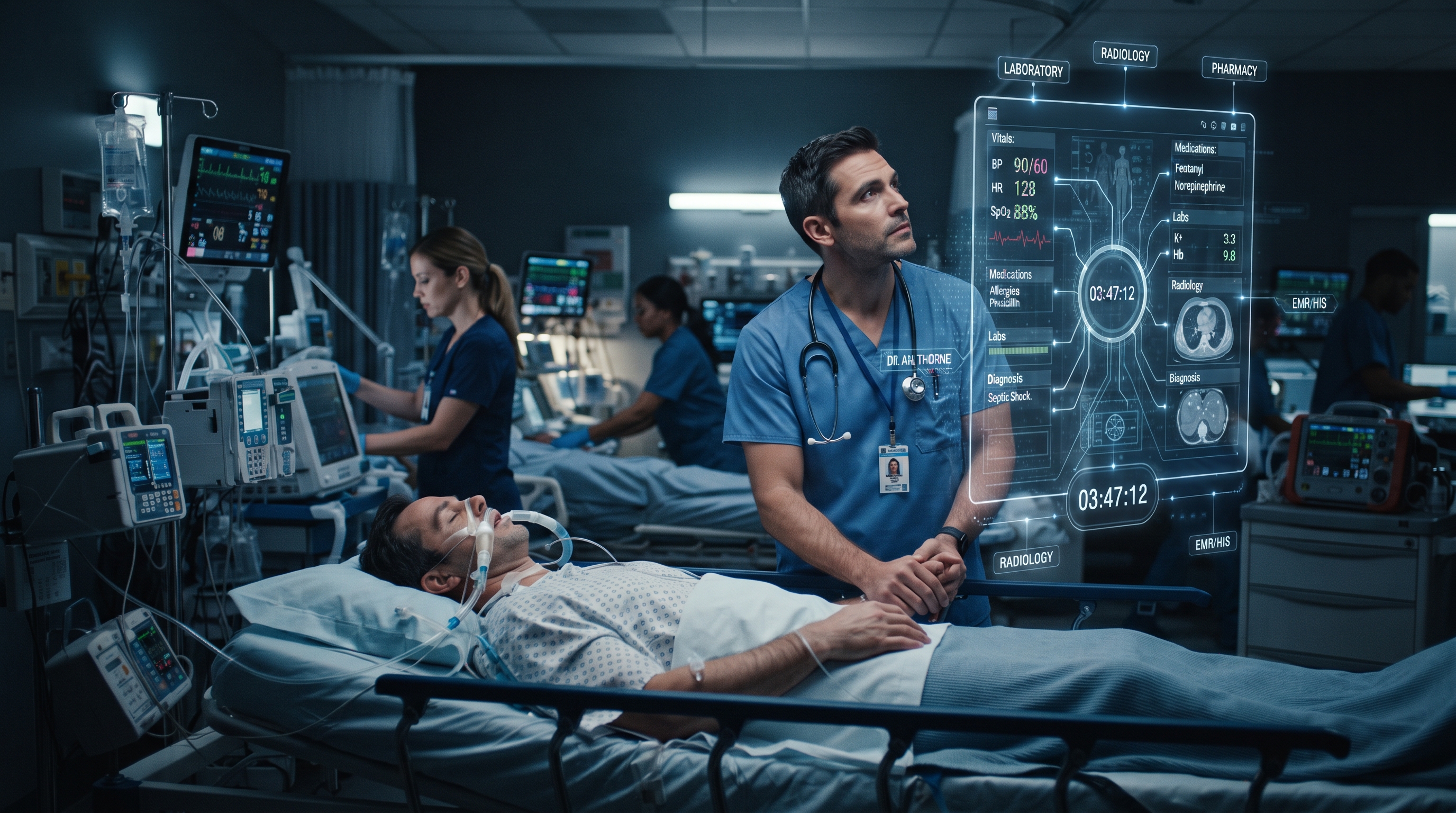
Imagine a patient arriving at an emergency department with severe breathing difficulties.
Within minutes, the medical team needs to understand the patient's medical history, current medications, allergies, previous diagnoses, and recent laboratory or radiology results.
The information may already exist.
But the critical question is:
Can the healthcare team access it immediately?
If the answer is yes, physicians can make decisions based on a more complete picture of the patient's condition.
If the information is scattered across paper records, disconnected systems, or different healthcare facilities, valuable time can be lost searching for records, making phone calls, requesting reports, or waiting for information to arrive.
This is why fast access to medical information has become more than a technological advantage. It is increasingly connected to healthcare efficiency, clinical decision-making, and patient safety.
Electronic health information exchange can help healthcare professionals access relevant information more efficiently, support better coordination, and reduce unnecessary duplication of tests and medication-related risks.
Why Does Every Minute Matter in Healthcare?
Not every medical condition has the same level of time sensitivity.
In critical situations, a patient's condition can deteriorate rapidly, requiring healthcare professionals to make several decisions within a very short period.
Fast access to information can be particularly important in:
- Emergency conditions
- Severe trauma
- Cardiac emergencies
- Stroke
- Severe allergic reactions
- Acute bleeding
- Conditions requiring urgent surgery
In these situations, physicians do not necessarily need more information.
They need the right information at the right moment.
What Medical Information Do Physicians Need Immediately?
When treating a patient, healthcare professionals may need access to:
- Medical history
- Current medications
- Drug allergies
- Previous diagnoses
- Laboratory results
- Radiology reports
- Vital signs
- Previous surgeries
- Emergency department visits
- Physician notes
- Previous treatment plans
When these records are available through an integrated electronic environment, physicians can develop a more complete understanding of the patient's condition.
When information is fragmented, however, retrieving the information itself can become part of the problem.
How Does Delayed Information Delay Clinical Decisions?
There is a clear relationship between information and clinical action:
Information → Analysis → Clinical Decision → Intervention → Outcome
When the first step is delayed, the following steps can also be delayed.
For example, if a physician needs a specific laboratory result before adjusting a treatment plan, a delay in receiving that result may delay the next clinical decision.
Similarly, if a physician does not know that a patient is taking a specific medication or has an allergy to a particular drug, selecting an appropriate treatment becomes more complicated.
This is why the speed of information flow within a hospital can directly influence the speed of care delivery.
The Role of a Hospital Information System (HIS)
A Hospital Information System (HIS) connects a wide range of clinical, administrative, and operational processes within a healthcare organization.
Instead of keeping information isolated across different departments, an integrated HIS can make relevant information available through a unified digital environment, based on appropriate access permissions.
Depending on the system, this may include:
- Patient registration
- Outpatient clinics
- Emergency department
- Laboratory
- Radiology
- Pharmacy
- Inpatient care
- Operating rooms
- Billing and insurance
- Electronic medical records
This integration reduces the time healthcare professionals spend searching for information or manually transferring it between departments.
Fast Medical Information Access in Emergency Departments
Emergency departments are among the environments where rapid access to information can have the greatest operational value.
Emergency physicians may treat patients who cannot communicate their medical history or who require immediate intervention.
In these situations, rapid access to:
- Medication history
- Allergies
- Previous diagnoses
- Laboratory results
- Radiology images
can help physicians develop a clearer understanding of the patient's condition.
Research examining health information exchange in emergency care has found associations between faster access to external health information and changes in care processes, including shorter emergency department visits and reduced use of some diagnostic tests and hospitalizations.
This does not mean that every minute saved automatically translates into a life saved. However, it demonstrates how information availability can influence the efficiency and coordination of healthcare delivery.
How Laboratory and Radiology Integration Reduces Delays
Laboratory and radiology departments are critical sources of clinical information.
When laboratory and radiology systems are integrated with a Hospital Information System (HIS), orders and results can flow through a connected digital environment and become available within the patient's clinical record.
This can help:
- Reduce manual data entry
- Minimize information transfer errors
- Accelerate result availability
- Improve communication between departments
- Reduce unnecessary duplicate testing
Instead of waiting for a printed report or manually searching for results, authorized healthcare professionals can access relevant information through the connected system.
Faster Access to a Patient's Medical History
A patient's medical history can be one of the most valuable sources of information during clinical decision-making.
For example, knowing that a patient:
- Has a drug allergy
- Takes a specific medication
- Has undergone previous surgery
- Has a chronic disease
- Recently completed a diagnostic test
may significantly influence the physician's approach.
An electronic medical record provides continuity that is difficult to achieve when healthcare information is fragmented across paper documents or disconnected systems.
Reducing Risks Caused by Missing Information
Patient safety is not only about having qualified healthcare professionals.
It also depends on whether those professionals can access accurate and relevant information when they need it.
Healthcare information systems can support:
- Medication history visibility
- Allergy information
- Laboratory result access
- Patient data consistency
- Reduced dependence on paper documentation
However, technology must also be designed carefully.
Poor usability, inaccurate data, outdated information, or excessive alerts can create new challenges instead of solving existing ones.
Therefore, effective healthcare information systems must balance speed with accuracy, usability, security, and clinical relevance.
Real-Time Information and Hospital Operations
The value of real-time data extends beyond individual patient records.
Hospital leadership and clinical teams can use real-time information to understand the operational status of the organization, including:
- Emergency department volume
- Available beds
- Operating room status
- Laboratory workload
- Pending diagnostic tests
- Resource utilization
This visibility allows hospital managers to identify bottlenecks and respond before operational problems become more severe.
For example, if emergency department capacity is rapidly increasing, hospital leadership can identify the situation earlier and coordinate available resources accordingly.
From Information to Clinical Decision
The real value of a healthcare information system is not simply storing thousands of records.
It is making information usable.
The process can be summarized as:
Data Collection → Data Integration → Information Access → Analysis → Decision Support → Clinical Action → Outcome Monitoring
The more efficiently this cycle operates, the less time healthcare professionals spend searching for information and performing unnecessary administrative tasks.
This allows them to focus more attention on patient care.
Why Departmental Integration Matters
A hospital is not a collection of completely independent departments.
A patient may move through:
Registration → Emergency → Physician → Laboratory → Radiology → Pharmacy → Inpatient Care
At every stage, information must move with the patient.
When departments operate independently, information can become fragmented.
When systems are integrated, relevant information can follow the patient's journey digitally.
This represents a fundamental shift from a hospital that moves information manually to a hospital where information flows automatically across the care journey.
What Should Hospitals Look for in an HIS?
Hospitals looking to improve information accessibility should not evaluate systems based solely on the number of features they offer.
They should consider several key factors.
Integration
Can the system connect clinical and administrative departments?
Speed
Can physicians access critical information without unnecessary steps?
Data Quality
Is the information accurate, structured, and regularly updated?
Usability
Can doctors and nurses find the information they need quickly during clinical workflows?
Security
Does the system ensure that only authorized users can access sensitive medical information?
Scalability
Can the system support increasing numbers of patients, users, departments, and data sources?
Interoperability
Can the HIS exchange information with laboratory, radiology, pharmacy, insurance, and other healthcare systems?
These factors determine whether a hospital information system actually improves information accessibility or simply digitizes existing processes.
Can Medical Information Actually Save a Patient's Life?
The most accurate answer is:
Medical information itself does not save a patient's life. But timely access to the right information can influence a clinical decision that may affect the patient's outcome.
This distinction is important.
Technology does not replace physicians, nurses, or clinical judgment.
Instead, it can remove one of the barriers that can interfere with effective decision-making:
the absence or delay of critical information.
A physician cannot use information they cannot access.
The Future of Fast Medical Information Access
Healthcare is moving toward increasingly connected and intelligent environments.
Future Hospital Information Systems are expected to combine:
- Electronic medical records
- Real-time clinical data
- Artificial intelligence
- Predictive analytics
- Clinical decision support
- Laboratory integration
- Radiology integration
- Patient monitoring
- Executive analytics
This could allow healthcare organizations to move beyond simply retrieving information toward predicting risks and supporting proactive care.
The objective is not simply to make hospitals more digital.
It is to make them more responsive, coordinated, and intelligent.
Conclusion
In healthcare, time is not merely an operational metric. In certain situations, it can become a critical factor in a patient's journey.
Fast access to medical history, medications, allergies, laboratory results, radiology reports, and other clinical information enables healthcare professionals to build a more complete picture of a patient's condition and make better-informed decisions.
A Hospital Information System (HIS) can play a central role by connecting departments, integrating healthcare data, and making relevant information accessible through a unified digital environment.
Ultimately, the question is not simply:
"How much medical data does the hospital have?"
The more important question is:
"How quickly can the right information reach the person who needs it?"
The closer the answer gets to "immediately," the more capable the hospital becomes of delivering coordinated, efficient, and safer care.