How Hospital Information Systems Turn Data into Clinical Decisions
In the digital healthcare era, data has become one of the most valuable assets for hospitals. However, collecting data is not enough — the real challenge lies in transforming it into accurate clinical decisions. Smart HIS systems play a critical role in converting complex healthcare data into effective, evidence-based treatment plans.
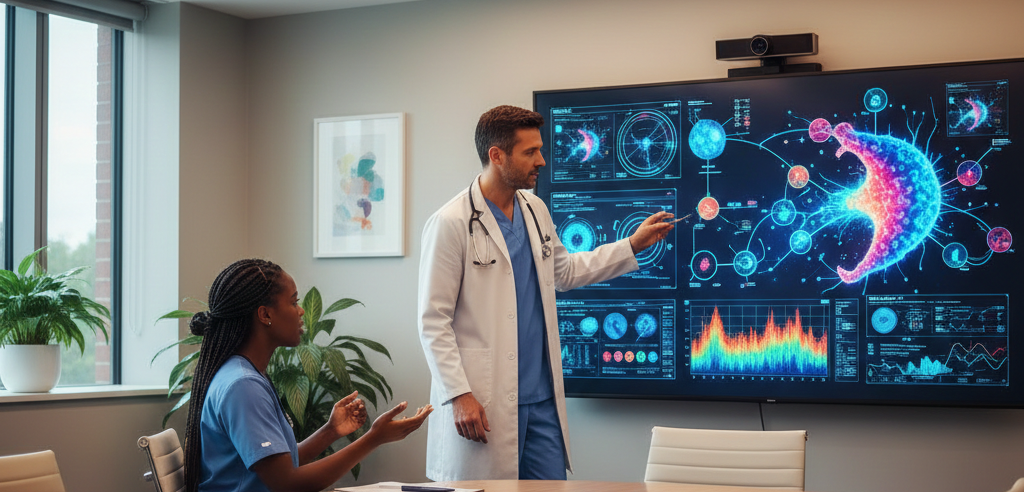
In today’s digital healthcare landscape, data has become one of the most valuable assets within hospitals and healthcare institutions. Every patient visit, lab result, radiology scan, prescription, and monitoring device generates vast amounts of information. However, the real challenge is no longer collecting data — it is transforming complex healthcare data into accurate, actionable clinical decisions.
Modern Hospital Information Systems (HIS) are no longer limited to administrative workflows or electronic record storage. They have evolved into intelligent platforms capable of integrating, analyzing, and interpreting medical data to support physicians in developing effective, evidence-based treatment plans.
This transformation — from raw data to clinical decision — is reshaping how healthcare is delivered.
The Era of Data-Driven Healthcare
Healthcare organizations today operate in an environment defined by:
- Electronic Medical Records (EMR)
- Laboratory Information Systems (LIS)
- Radiology Information Systems (RIS/PACS)
- Pharmacy management platforms
- Insurance and billing systems
- Wearable devices and remote monitoring tools
Each system generates critical information. Combined, they form an enormous healthcare data ecosystem. When properly integrated and analyzed, this data can:
- Improve patient outcomes
- Reduce medical errors
- Enhance operational efficiency
- Support proactive care strategies
However, without intelligent integration, data remains fragmented, overwhelming, and underutilized.
The Core Challenge: Data Abundance vs. Time Constraints
Physicians today face increasing pressure:
- Growing patient volumes
- Complex medical histories
- Multidisciplinary care coordination
- Limited consultation time
Manually reviewing scattered data sources is inefficient and increases the risk of oversight. In high-stakes clinical environments, delayed or incomplete information can directly impact patient safety.
This is where a smart HIS becomes indispensable — transforming complexity into clarity.
How HIS Integrates and Structures Healthcare Data
1. Centralized Data Integration
A modern HIS acts as a unified digital backbone that connects:
- Laboratory systems
- Radiology platforms
- Pharmacy databases
- Insurance and billing modules
- Scheduling systems
- Clinical documentation tools
Instead of navigating multiple disconnected platforms, healthcare providers access a comprehensive, unified patient profile in real time.
This centralized approach ensures that no critical data is overlooked.
2. Real-Time Data Accessibility
Speed matters in clinical decision-making.
Advanced HIS platforms provide:
- Instant lab result updates
- Automated alerts for critical values
- Live vital sign monitoring integration
- Immediate medication history access
Real-time access enables physicians to respond faster and more confidently, especially in emergency or critical care scenarios.
Clinical Decision Support Systems (CDSS): Intelligence at the Point of Care
One of the most powerful components of modern HIS platforms is the Clinical Decision Support System (CDSS).
CDSS tools provide:
- Drug interaction alerts
- Allergy notifications
- Dosage recommendations
- Evidence-based treatment guidelines
- Preventive care reminders
- Risk scoring models
Rather than relying solely on memory or experience, physicians receive intelligent prompts and data-driven insights directly within their workflow.
This improves both accuracy and efficiency.
Predictive Analytics: From Reactive to Proactive Care
Traditional healthcare models often react to complications after they occur. Predictive analytics within HIS platforms shift care toward prevention.
By analyzing historical and real-time data, HIS can:
- Identify high-risk patients
- Predict hospital readmissions
- Detect early signs of deterioration
- Forecast disease progression
- Suggest personalized care pathways
Predictive insights empower healthcare providers to intervene earlier, reducing complications and improving long-term outcomes.
Reducing Medical Errors Through Intelligent Data Management
Medical errors are frequently linked to:
- Incomplete patient information
- Medication conflicts
- Communication gaps between departments
- Manual documentation mistakes
A smart HIS mitigates these risks by:
- Automatically flagging drug interactions
- Verifying dosage accuracy
- Maintaining comprehensive allergy records
- Standardizing documentation protocols
- Ensuring cross-departmental visibility
By embedding safety checks into clinical workflows, HIS strengthens patient safety and compliance.
Enhancing Multidisciplinary Collaboration
Modern healthcare relies heavily on teamwork across specialties.
HIS enables seamless collaboration by:
- Providing shared access to patient data
- Allowing real-time documentation updates
- Supporting digital care coordination
- Tracking treatment progress across departments
When physicians, nurses, pharmacists, and specialists operate within a unified system, care becomes more cohesive and efficient.
Personalized Treatment Planning Through Data Insights
Healthcare is increasingly moving toward personalized medicine.
By analyzing:
- Patient history
- Diagnostic results
- Genetic markers (when available)
- Lifestyle factors
- Treatment response trends
HIS platforms help clinicians design more individualized treatment plans.
Personalized care improves effectiveness, reduces trial-and-error approaches, and enhances patient satisfaction.
Artificial Intelligence Integration in HIS
Advanced HIS solutions are integrating Artificial Intelligence (AI) capabilities to further enhance decision-making.
AI-powered features may include:
- Radiology image analysis support
- Pattern recognition in large datasets
- Risk stratification modeling
- Natural language processing for clinical notes
- Predictive disease modeling
AI does not replace clinicians; rather, it augments their expertise with computational precision and speed.
Measurable Impact on Clinical Outcomes
When decisions are:
- Data-driven
- Real-time supported
- Evidence-based
- Predictively informed
Hospitals often experience:
- Reduced length of stay
- Lower readmission rates
- Fewer adverse events
- Improved recovery times
- Enhanced quality metrics
Data transformation directly translates into measurable improvements in care delivery.
Strategic Value Beyond Clinical Care
The benefits of HIS-driven data transformation extend beyond bedside decisions.
Hospital administrators can use aggregated data to:
- Monitor department performance
- Track quality indicators
- Identify operational inefficiencies
- Analyze treatment cost patterns
- Support strategic planning
By turning operational data into actionable insights, HIS supports institutional growth and long-term sustainability.
Supporting Value-Based Healthcare Models
Healthcare systems worldwide are transitioning toward value-based care models, where reimbursement and reputation are tied to outcomes rather than volume.
A robust HIS supports this shift by:
- Tracking outcome metrics
- Measuring treatment effectiveness
- Monitoring quality benchmarks
- Supporting regulatory compliance
- Providing transparent reporting
Data transparency becomes a competitive advantage.
Overcoming Implementation Challenges
While the benefits are significant, successful HIS implementation requires:
- Strong data governance policies
- Interoperability standards
- Staff training and adoption strategies
- Cybersecurity safeguards
- Continuous system optimization
Hospitals that prioritize structured implementation maximize the return on investment and clinical impact.
The Future: Intelligent, Learning Healthcare Systems
The evolution of HIS is moving toward adaptive, learning systems capable of continuously improving through:
- Machine learning algorithms
- Ongoing data refinement
- Clinical feedback loops
- Population health analytics
In the near future, HIS platforms will not only support decisions — they will anticipate needs and recommend optimized care strategies based on global data patterns.
Conclusion
In modern healthcare, data alone has no value unless it informs action. The true transformation occurs when complex healthcare data is converted into meaningful clinical decisions.
Smart Hospital Information Systems serve as the bridge between raw data and effective treatment plans. Through integration, real-time access, clinical decision support, predictive analytics, and AI-enhanced insights, HIS empowers healthcare professionals to deliver safer, faster, and more personalized care.
Hospitals that invest in advanced HIS platforms are not merely upgrading their technology — they are building a foundation for better decisions, improved patient outcomes, and sustainable healthcare excellence.
From data to decision — this is the future of intelligent healthcare.