How Smart Analytics Identifies Resource-Draining Hospital Departments
Some hospital departments consume far more resources than others, but the real challenge begins when healthcare leaders lack visibility into where operational waste is happening. This is where smart analytics powered by a Hospital Information System (HIS) becomes essential. By analyzing healthcare data in real time, hospitals can identify resource-draining departments, improve operational efficiency, and reduce unnecessary costs. In this article, we explore how smart analytics transforms hospital resource management and supports better decision-making.

In modern healthcare, resources are among the most critical factors affecting hospital success. Whether these resources are financial, operational, or human, managing them efficiently has become essential for maintaining high-quality patient care and long-term sustainability.
However, many hospitals struggle to identify where resources are being overused or wasted. Without accurate visibility into operational performance, hospitals may continue losing money, reducing productivity, and overwhelming staff without understanding the root causes.
This is where smart analytics powered by a Hospital Information System (HIS) plays a transformative role. By turning hospital data into actionable insights, healthcare organizations can detect inefficiencies, optimize resource allocation, and improve operational performance.
What Are Smart Analytics in Healthcare?
Smart analytics refers to the use of advanced technologies, healthcare data, and reporting tools to analyze hospital performance and support data-driven decision-making.
These analytics rely on:
- Operational data
- Financial reports
- Patient information
- Performance indicators
- Resource utilization metrics
The goal is not simply to collect data, but to transform it into actionable intelligence that improves hospital operations.
Why Is It Difficult to Identify Resource-Draining Departments?
In some hospitals, performance evaluation still depends heavily on assumptions or personal experience rather than measurable data.
This often leads to:
- Difficulty identifying inefficiencies
- Inaccurate operational decisions
- Long-term continuation of hidden problems
Smart analytics provides greater transparency and operational visibility.
Types of Resources Commonly Wasted in Hospitals
1. Human Resources
Examples include:
- Unbalanced staff workloads
- Excessive overtime hours
- Low productivity in certain departments
2. Financial Resources
Hospitals may face:
- Rising operational costs
- Excessive medical supply consumption
- Low profitability in specific services
3. Operational Resources
Examples include:
- Inefficient operating room usage
- Overcrowded clinics
- Slow patient flow
How Smart Analytics Detects Operational Waste
1. Performance Indicator Analysis (KPIs)
Key performance indicators help hospitals measure:
- Average waiting times
- Bed occupancy rates
- Department productivity
- Staff efficiency
These metrics reveal which departments are underperforming or consuming excessive resources.
2. Resource Utilization Analysis
Smart systems analyze:
- Medication consumption
- Medical equipment usage
- Operational expenses
to identify areas where waste is occurring.
3. Cross-Department Performance Comparison
Comparing departments often reveals operational gaps such as:
- Departments consuming more resources without delivering better outcomes
- Units experiencing excessive pressure compared to others
4. Predictive Analytics
Advanced analytics helps hospitals:
- Forecast patient surges
- Predict operational bottlenecks
- Prevent future inefficiencies
before problems escalate.
The Role of Hospital Information System (HIS) in Smart Analytics
A Hospital Information System (HIS) serves as the primary source of hospital data.
The system supports analytics by:
1. Centralizing Data Across Departments
Including:
- Emergency departments
- Laboratories
- Radiology departments
- Pharmacies
- Financial departments
2. Providing Real-Time Reporting
Hospital leaders can monitor operational performance instantly and make faster decisions.
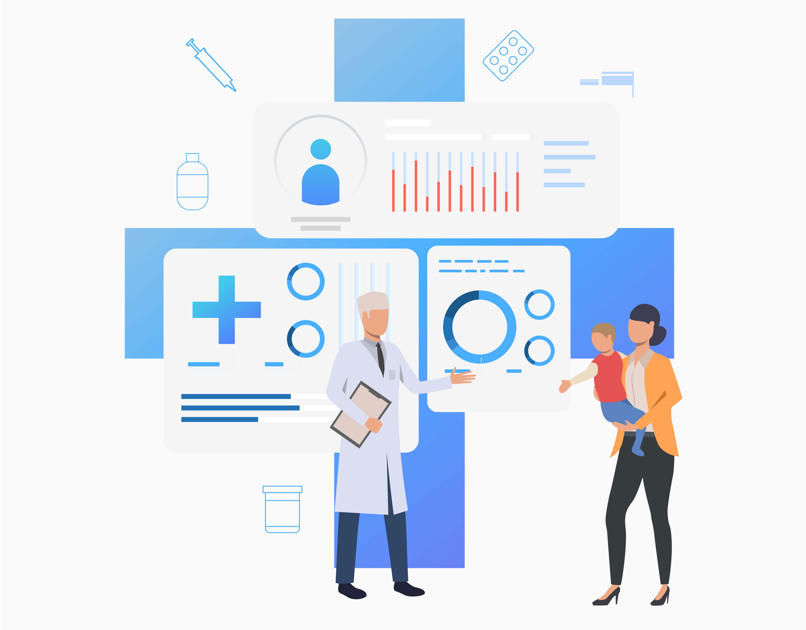
3. Delivering Smart Dashboards
Modern dashboards display:
- Operational KPIs
- Resource consumption rates
- Financial performance
- Department efficiency metrics
in a clear and actionable format.
Examples of Resource-Draining Departments
1. Emergency Departments
Emergency units may experience:
- High patient pressure
- Delayed workflows
- Excessive staff workload
2. Operating Rooms
Poor scheduling can lead to:
- Wasted operating room time
- Delayed procedures
- Increased operational costs
3. Laboratories and Radiology
Repeated tests or delayed reporting can increase costs and slow patient care delivery.
Benefits of Identifying Resource Waste
When hospitals gain clear operational visibility, they can:
- Reduce waste
- Improve resource allocation
- Increase operational efficiency
- Enhance patient care quality
- Lower operational costs
This creates measurable improvements across the organization.
Becoming a Data-Driven Hospital
Hospitals can improve operational intelligence through:
1. Implementing Integrated Systems
An integrated Hospital Information System (HIS) ensures seamless data flow between departments.
2. Building a Data-Driven Culture
Hospital decisions should rely on reports and analytics rather than assumptions.
3. Training Staff on Data Usage
Employees must understand how to interpret and benefit from healthcare analytics.
Challenges Hospitals Face
Despite the benefits of smart analytics, hospitals may still face challenges such as:
- Poor data quality
- Resistance to digital transformation
- Disconnected systems
- Limited analytical expertise
Fortunately, modern healthcare technologies continue making these challenges easier to overcome.
Conclusion
Smart analytics has become a critical component of modern hospital management, especially for identifying departments that consume excessive resources and generate operational inefficiencies.
By relying on a Hospital Information System (HIS), hospitals can collect, analyze, and visualize healthcare data more effectively, allowing healthcare leaders to make smarter decisions, reduce waste, and improve operational performance.
Ultimately, successful hospitals are not simply those with the most resources—but those that know how to manage them intelligently.