How Smart HIS Systems Improve Hospital Visitor Experience (Beyond Patient Care)
Discover how smart HIS systems enhance hospital visitor experience through digital visitor management, queue optimization, smart navigation, and improved security in modern healthcare facilities.
In today’s rapidly evolving healthcare environment, hospitals are no longer evaluated solely based on clinical outcomes. The overall experience inside a healthcare facility — including that of visitors — has become a key factor in shaping institutional reputation and public trust.
While most digital transformation efforts focus on improving patient care, hospital visitors — such as family members, insurance representatives, medical partners, suppliers, and administrative guests — also interact with hospital systems daily. Their experience directly impacts the hospital’s image, operational efficiency, and community perception.
Smart Hospital Information Systems (HIS) are no longer limited to managing medical records and clinical workflows. They now play a strategic role in optimizing visitor management, enhancing security, and creating a seamless, organized hospital environment.
Why Visitor Experience Has Become a Strategic Priority
Hospital visitor experience influences:
- Institutional reputation
- Community trust
- Brand perception
- Future hospital selection decisions
- Online reviews and word-of-mouth recommendations
A visitor who faces long waiting times, confusing navigation, overcrowded entrances, or complicated access procedures may develop a negative impression — even if the clinical care provided is excellent.
Improving visitor experience is no longer optional; it is a competitive advantage in modern healthcare.
Understanding the Difference: Patients vs. Visitors
Traditional HIS implementations typically focus on:
- Electronic medical records (EMR)
- Appointment scheduling
- Billing and insurance processing
- Clinical workflow management
However, visitor experience revolves around different factors, including:
- Smooth registration and entry
- Easy navigation within the facility
- Reduced waiting time
- Clear communication
- Secure and controlled access
A modern HIS platform integrates both patient-centric and visitor-centric processes into one intelligent ecosystem.
How Smart HIS Systems Optimize Visitor Management
1. Digital Visitor Registration and Management
Integrated visitor management modules allow hospitals to:
- Digitally register visitors
- Issue temporary access badges
- Assign specific visiting zones
- Track entry and exit times
- Control visiting hours automatically
This reduces manual paperwork, enhances security, and ensures smoother visitor flow.
2. Queue Management and Reduced Waiting Times
Long waiting times are among the biggest sources of visitor dissatisfaction.
Smart HIS solutions integrate:
- Digital queue management systems
- Automated visitor check-in
- SMS notifications
- Pre-scheduled visiting appointments
- Real-time occupancy tracking
These tools help prevent overcrowding and improve operational coordination.
3. Smart Navigation and Wayfinding Systems
Hospitals are often large and complex facilities, making navigation challenging for visitors.
Advanced HIS platforms can integrate with:
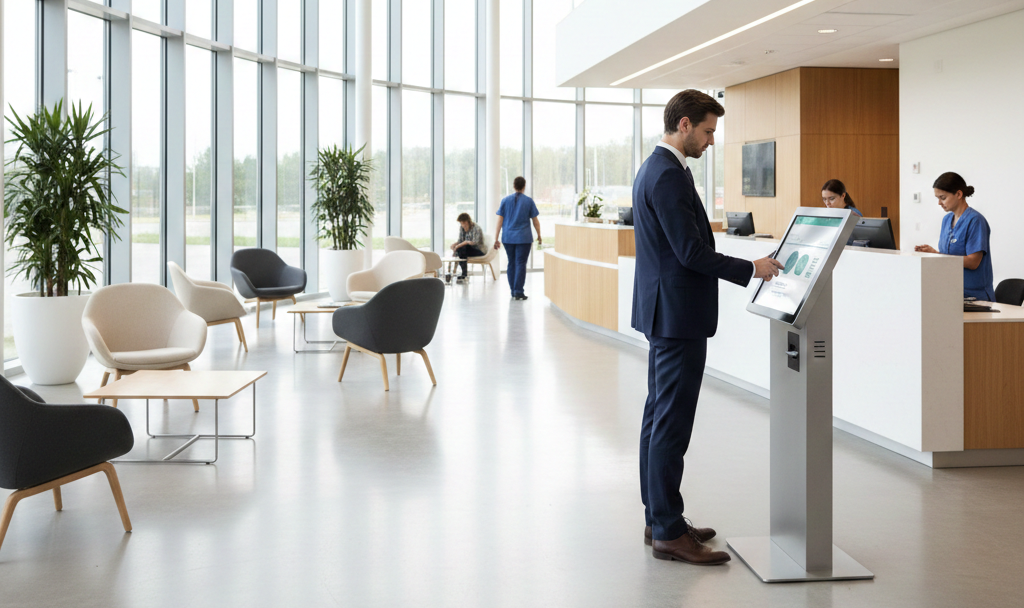
- Interactive digital kiosks
- Indoor navigation maps
- QR-code-based location guides
- Mobile applications with step-by-step directions
This significantly reduces confusion, stress, and dependency on staff for directions.
4. Enhanced Security and Access Control
Security is critical in healthcare environments.
Modern HIS systems can connect with:
- Smart access control systems
- ID verification tools
- Restricted area permissions
- Real-time visitor monitoring dashboards
By managing access intelligently, hospitals ensure safety while maintaining a welcoming environment.
Leveraging Data Analytics to Continuously Improve Visitor Experience
One of the most powerful features of smart HIS systems is data analytics.
Hospitals can generate insights such as:
- Peak visiting hours
- Average waiting times
- Visitor flow by department
- Frequency of repeat visits
- Feedback and satisfaction metrics
These insights enable leadership teams to make data-driven decisions, adjust staffing levels, optimize scheduling, and enhance service quality over time.
The Impact on Hospital Reputation and Community Trust
A well-managed visitor journey reflects:
- Organizational efficiency
- Professionalism
- Technological advancement
- Patient- and community-centered values
In the era of digital reviews and social media, visitor impressions can significantly influence public perception. Hospitals that prioritize both patient and visitor experience position themselves as modern, smart healthcare institutions.
HIS as a Core Component of the Smart Hospital Strategy
Smart Hospital Information Systems contribute to:
- Healthcare digital transformation
- Operational automation
- Process optimization
- Smart infrastructure development
- Improved stakeholder experience
By extending digital transformation beyond clinical operations to include visitor management, hospitals create a fully integrated smart ecosystem.
Conclusion
Hospital visitor experience is no longer a secondary consideration — it is a strategic element of healthcare excellence.
Smart HIS systems enhance visitor management through digital registration, queue optimization, navigation tools, access control, and data-driven improvements. By focusing on every individual who enters the facility — not just patients — hospitals strengthen community trust, improve operational efficiency, and build a sustainable competitive advantage.
In modern healthcare, a truly smart hospital is one that cares about every journey inside its walls.