Integration of Medical Systems The Road to a Unified Smart Hospital
In the digital era, integration of medical systems has become essential for creating unified, smart hospitals. A fully integrated hospital relies on seamless communication between medical, administrative, and technical systems to provide accurate, safe, and smooth patient care.
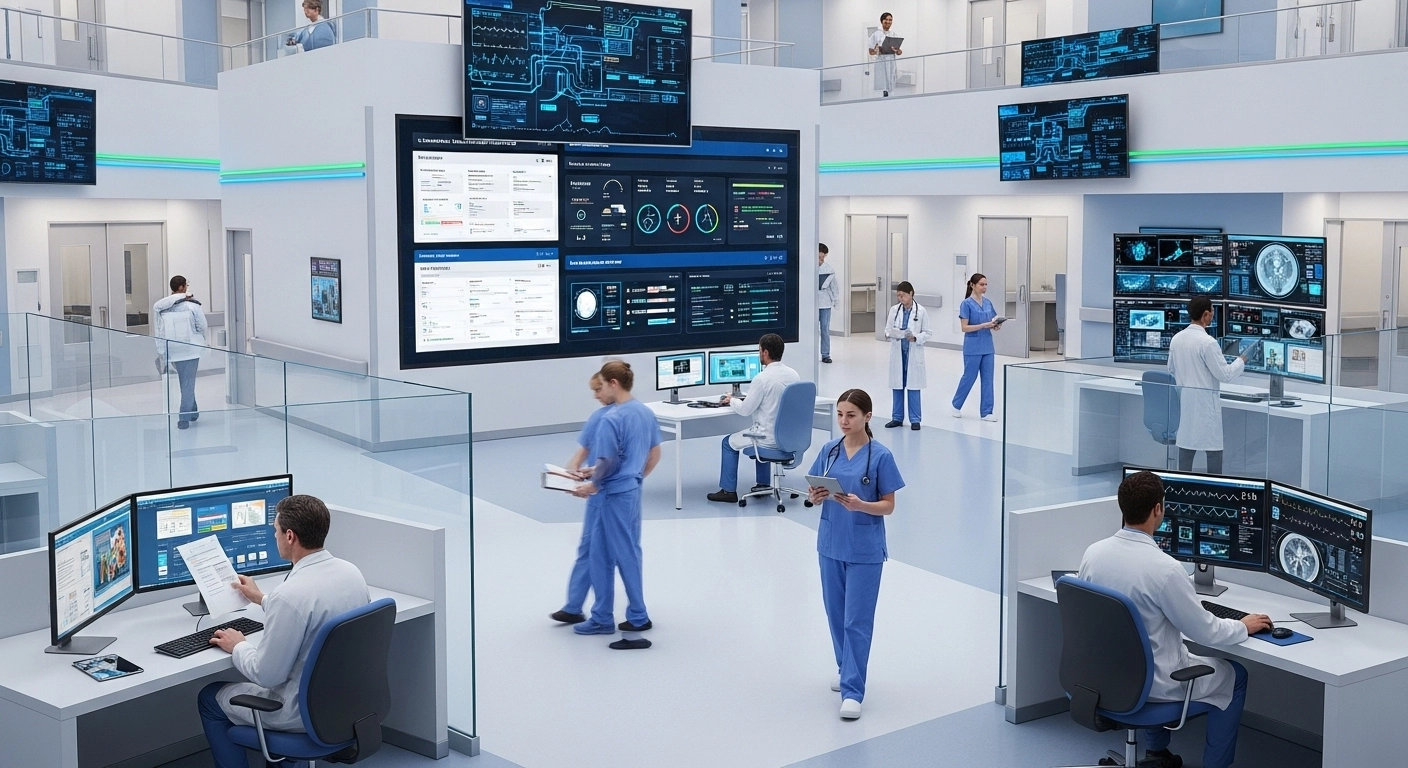
With increasing complexity in healthcare and the growing number of departments, hospitals face significant challenges in efficiently managing information and daily operations.
Here, integration of medical systems plays a crucial role, linking electronic medical records (EMR), hospital information systems (HIS), billing systems, and other smart applications.
System integration helps improve care quality, reduce errors, accelerate procedures, and support precise administrative and clinical decision-making. This article explores the concept of medical system integration, its benefits, components, and the importance of moving toward a unified smart hospital.
1. What Is Medical Systems Integration?
Medical systems integration is the connection of different systems and applications within a hospital to allow seamless and secure data exchange.
Integrated systems include:
- Hospital Information System (HIS)
- Electronic Medical Records (EMR)
- Laboratory and imaging systems
- Billing and accounting systems
- Smart monitoring and patient follow-up applications
2. Why Is Medical System Integration Important?
Integration contributes to:
- Improving healthcare quality: accurate and timely sharing of medical data across departments
- Reducing medical and administrative errors: avoiding data duplication or loss
- Speeding up procedures: faster access to information reduces patient waiting times
- Supporting decision-making: unified data helps staff and management make informed decisions
- Increasing hospital efficiency: better coordination increases productivity and reduces resource waste
3. Components of Medical Systems Integration
Successful integration includes:
- HIS and EMR integration: seamless access to patient data across departments
- Laboratory and imaging integration: instant access to test results and scans
- Financial and billing integration: accurate and quick processing of invoices and insurance claims
- Smart apps for patients and staff: simplifying booking, follow-up, and internal communication
- Advanced dashboards and analytics: providing management with a comprehensive view of clinical and operational performance
4. Benefits of Medical Systems Integration
- Improved patient experience: faster service, precise follow-ups, fewer errors
- Enhanced physician and staff experience: reduced administrative burden, focus on care
- Higher quality and safety: unified data supports accurate diagnosis and reduces mistakes
- Greater operational efficiency: organized processes and reduced downtime between departments
- Easier reporting and decision-making: accurate, real-time reports help strategic planning
5. Role of Technology in Supporting Unified Smart Hospitals
- AI and predictive analytics: anticipate patient needs and optimize workflow
- Smart mobile applications: facilitate communication and follow-up for patients and staff
- Integrated monitoring systems: centralized tracking of patient devices, lab data, and imaging
- Smart dashboards and reporting tools: visualize data clearly for hospital management
6. Challenges in Medical System Integration
- Staff resistance to change
- Initial implementation costs and system connectivity
- Continuous training for optimal use
- Ensuring data security and compliance with regulations
7. Practical Steps to Achieve a Unified Smart Hospital
- Assess current systems and hospital needs
- Choose an integrated system suitable for all departments
- Train medical and administrative staff for optimal use
- Connect all departments through the integrated system and monitor performance
- Use analytics and AI to enhance service quality
- Regularly update systems to ensure security and accuracy
Conclusion
Medical systems integration is the foundation of a smart, unified hospital.
Integrated systems allow healthcare staff to provide more accurate care, improve patient experience, increase operational efficiency, and support strategic decision-making.
A unified smart hospital represents the future of healthcare, combining technology, organization, and medical quality in a single integrated system.