More Staff, Same Crowding: Why Some Hospitals Still Struggle With Patient Flow
Many hospitals assume that hiring more doctors, nurses, and administrative staff is the fastest way to reduce overcrowding and improve patient services. However, increasing staff numbers alone does not always solve operational bottlenecks. Without efficient workflow management and smart healthcare systems, hospitals may continue experiencing long waiting times and crowded facilities. In this article, we explore why overcrowding persists despite workforce expansion and how a Hospital Information System (HIS) helps hospitals improve patient flow and operational efficiency.
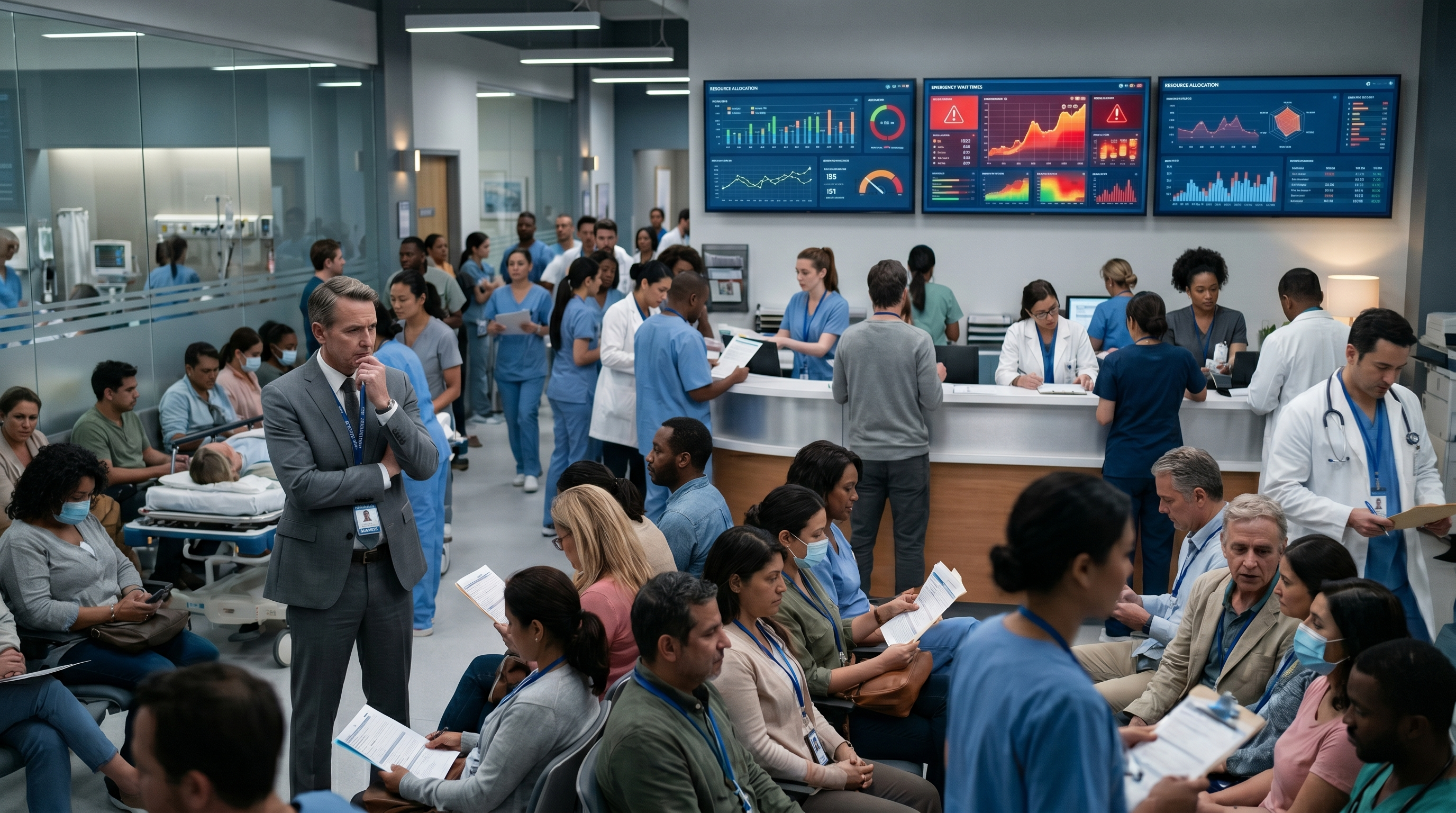
Hospital overcrowding remains one of the most persistent challenges facing healthcare organizations worldwide. As patient volumes continue to rise and expectations for fast, efficient healthcare services increase, hospitals are under constant pressure to improve patient flow and reduce waiting times.
When overcrowding becomes a serious issue, many hospital leaders immediately turn to workforce expansion as the primary solution. Hiring additional physicians, nurses, and administrative personnel appears to be a logical response.
Yet many hospitals discover an unexpected reality: despite increasing staff numbers, overcrowding remains unchanged.
This raises an important question:
If staffing shortages were the problem, why does crowding continue after hiring more employees?
The answer often lies in operational inefficiencies, workflow bottlenecks, and poor resource management rather than workforce size alone. Modern healthcare organizations increasingly rely on a Hospital Information System (HIS) to address these challenges and optimize patient flow.
Hospital Crowding Is Not Always a Staffing Problem
One of the most common misconceptions in healthcare management is that overcrowding automatically means there are not enough employees.
In reality, some hospitals already have:
- Adequate physician coverage
- Sufficient nursing staff
- Large administrative teams
Yet they still experience:
- Long patient queues
- Appointment delays
- Slow service delivery
The problem often stems from how resources are managed rather than how many resources are available.
Poor Staff Allocation
In many hospitals, staffing resources are not distributed effectively across departments.
For example:
- Emergency departments may experience excessive patient demand
- Other departments may have underutilized personnel
This imbalance creates:
- Operational bottlenecks
- Increased waiting times
- Reduced service efficiency
A Hospital Information System (HIS) provides real-time visibility into workload distribution, enabling hospitals to allocate resources more effectively.
Inefficient Appointment Scheduling
Even with a larger workforce, poor appointment management can continue generating overcrowding.
Common scheduling issues include:
- Overbooking patients during peak hours
- Failing to account for actual consultation times
- Lack of demand forecasting
The result is:
- Congested waiting areas
- Delayed appointments
- Reduced patient satisfaction
Smart scheduling solutions help balance patient demand throughout the day.
Slow Manual Processes
Many hospitals still depend heavily on:
- Paper-based registration
- Manual documentation
- Repetitive data entry
These processes consume valuable time and create unnecessary queues.
Even when additional staff members are available, inefficient workflows continue slowing operations.
A Hospital Information System (HIS) automates many routine administrative processes, significantly reducing delays.
Poor Interdepartmental Coordination
The patient journey involves multiple departments, including:
- Outpatient clinics
- Laboratories
- Radiology departments
- Pharmacies
- Billing offices
When these departments operate independently, hospitals often face:
- Repeated procedures
- Delayed test results
- Communication gaps
- Longer patient journeys
These inefficiencies contribute significantly to overcrowding.
Lack of Real-Time Operational Visibility
Some hospital managers lack immediate access to operational performance data.
Without real-time visibility into:
- Patient volumes
- Waiting times
- Department congestion
- Resource utilization
it becomes difficult to respond quickly to emerging bottlenecks.
Modern Hospital Information System (HIS) platforms provide live dashboards that support proactive decision-making.
Failure to Utilize Healthcare Data
Hospitals generate enormous amounts of operational data every day.
This data includes:
- Patient movement patterns
- Waiting time statistics
- Department performance metrics
- Capacity utilization rates
Unfortunately, many organizations fail to transform this information into actionable insights.
Healthcare analytics helps identify:
- Bottlenecks
- Capacity constraints
- Workflow inefficiencies
allowing hospitals to make informed operational improvements.
More Employees Can Sometimes Increase Complexity
Surprisingly, hiring additional staff can occasionally create new challenges.
Without clear workflows and proper coordination, hospitals may experience:
- Role duplication
- Communication issues
- Process inconsistencies
- Increased management complexity
In such cases, workforce expansion can add complexity instead of improving efficiency.
How Hospital Information System (HIS) Helps Reduce Crowding
A Hospital Information System (HIS) is one of the most effective tools for managing patient flow and reducing overcrowding.
1. Smart Appointment Management
The system helps hospitals:
- Balance appointment schedules
- Prevent overbooking
- Manage peak demand periods
This significantly improves patient flow.
2. Patient Journey Optimization
Hospitals can track patients throughout their entire healthcare journey, reducing unnecessary delays between departments.
3. Real-Time Operational Monitoring
Hospital administrators gain immediate visibility into:
- Current patient volumes
- Department congestion levels
- Waiting times
- Resource availability
This enables faster operational interventions.
4. Workflow Automation
From registration to billing, automation reduces administrative delays and eliminates unnecessary bottlenecks.
Key Metrics for Identifying Crowding Issues
Hospitals seeking to understand overcrowding should monitor metrics such as:
- Average patient waiting time
- Total patient journey duration
- Clinic utilization rates
- Bed occupancy rates
- Staff productivity
- Laboratory turnaround times
These indicators provide valuable insights into operational performance.
Smart Hospitals Focus on Efficiency, Not Headcount
Modern healthcare organizations no longer measure success solely by the number of employees they hire.
Instead, they focus on:
- Operational efficiency
- Patient flow optimization
- Data-driven decision-making
- Resource utilization
- Patient experience improvement
This approach delivers more sustainable results than workforce expansion alone.
Improving the Patient Experience
Reducing overcrowding directly improves:
- Patient satisfaction
- Service quality
- Staff productivity
- Hospital reputation
It also contributes to stronger financial performance and long-term competitiveness.
Conclusion
The inability of some hospitals to reduce overcrowding despite increasing staff numbers does not mean staffing is unimportant. Rather, it highlights that crowding is often caused by operational inefficiencies, workflow bottlenecks, and ineffective resource management.
By implementing a Hospital Information System (HIS), hospitals can optimize patient flow, improve appointment scheduling, utilize healthcare data effectively, and reduce waiting times in a sustainable way.
Ultimately, successful hospitals are not those with the largest workforce, but those that manage their resources, workflows, and patient journeys most efficiently.