Traditional vs Data-Driven Hospitals: Who Wins in the End?
As digital transformation accelerates across the healthcare sector, the gap between traditional hospitals and data-driven hospitals continues to grow. Modern healthcare institutions rely on Hospital Information System (HIS) and advanced analytics to make informed decisions and optimize operations, while traditional hospitals still depend on manual processes and personal experience. In this article, we explore the key differences between these two models and determine which one is best positioned for long-term success.
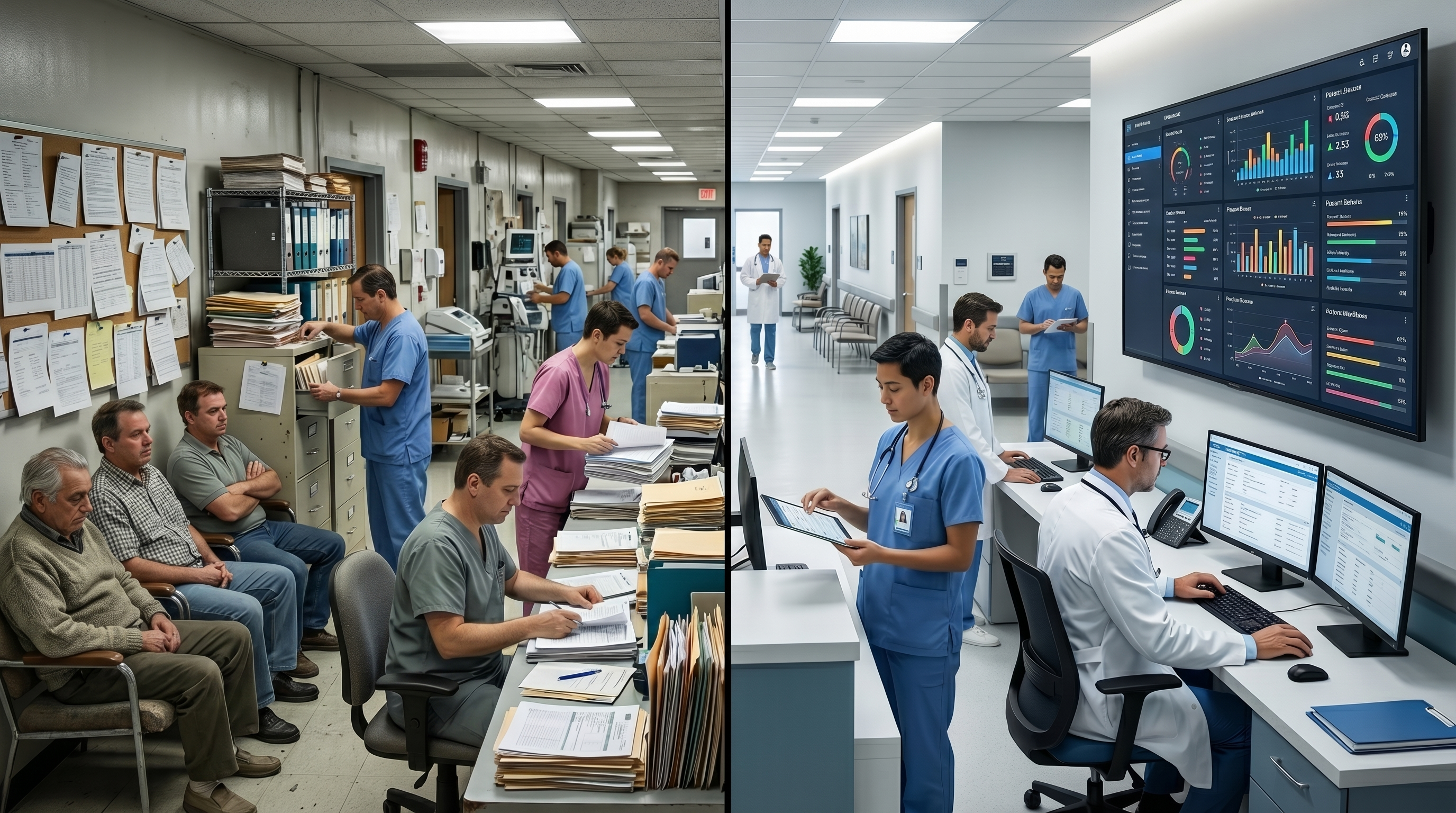
The healthcare industry is undergoing a significant transformation driven by technology and the growing importance of data in decision-making. Today, hospitals can be broadly categorized into two main types: traditional hospitals that rely on manual processes, and data-driven hospitals that leverage modern technologies such as Hospital Information System (HIS).
This transformation goes beyond simply adopting new tools—it represents a fundamental shift in how hospitals operate, make decisions, and manage resources. Understanding the difference between these two models is essential for identifying which approach is more sustainable and competitive in the long run.
What Is a Traditional Hospital?
A traditional hospital typically relies on:
- Paper-based processes or limited digital systems
- Decision-making based on personal experience
- Weak integration between departments
- Lack of advanced analytics
In such environments, data is often fragmented or inaccessible, leading to:
- Slow operations
- Higher risk of errors
- Reduced operational efficiency
What Is a Data-Driven Hospital?
A data-driven hospital leverages modern technologies, especially Hospital Information System (HIS), to manage and optimize operations.
These hospitals are characterized by:
- Real-time access to accurate data
- Data-driven decision-making
- Full integration across departments
- Automation of administrative and clinical processes
This model provides a comprehensive view of hospital performance, enabling continuous improvement.
Key Differences in Daily Operations
1. Patient Management
- Traditional hospitals: Manual registration and slower processes
- Data-driven hospitals: Fast digital registration using Hospital Information System (HIS) with real-time tracking
2. Decision-Making
- Traditional hospitals: Based on intuition and experience
- Data-driven hospitals: Based on reports and analytics generated by Hospital Information System (HIS)
3. Resource Management
- Traditional hospitals: Inefficient allocation of resources
- Data-driven hospitals: Optimized resource utilization through data insights
Impact on Healthcare Quality
In traditional hospitals:
- Diagnoses may be delayed
- Patient follow-up may lack accuracy
- Medical errors are more likely
In contrast, data-driven hospitals:
- Enable faster and more accurate decisions
- Provide continuous patient monitoring
- Improve overall quality of care
Impact on Financial Performance
Traditional hospitals often face:
- Resource wastage
- Billing inaccuracies
- Inefficient revenue management
On the other hand, data-driven hospitals, powered by Hospital Information System (HIS), can:
- Improve billing accuracy
- Accelerate revenue collection
- Reduce operational costs
- Enhance financial visibility
The Role of Hospital Information System (HIS)
A Hospital Information System (HIS) is the backbone of any data-driven hospital. It provides:
- Centralized data management
- Real-time analytics and reporting
- Seamless integration across departments
- Automation of workflows
Without such a system, achieving true digital transformation becomes extremely difficult.
Challenges in Becoming a Data-Driven Hospital
Despite its advantages, transitioning to a data-driven model comes with challenges, including:
- Resistance to change from staff
- Need for continuous training
- Initial implementation costs
- Integration with legacy systems
However, these challenges can be overcome with proper planning and execution.
Who Wins in the End?
The answer is clear:
Data-driven hospitals are the winners.
They are:
- More efficient
- More cost-effective
- Faster in decision-making
- Better at delivering patient-centered care
Traditional hospitals, on the other hand, will struggle to remain competitive in an increasingly digital healthcare environment.
Conclusion
The difference between traditional hospitals and data-driven hospitals is no longer just about tools—it is about mindset, strategy, and operational excellence. As healthcare continues to evolve, adopting a Hospital Information System (HIS) and embracing data-driven practices is no longer optional.
Hospitals that invest in data and technology today are the ones that will lead the future of healthcare tomorrow.