Why Do Some Hospitals Become Slower Despite Having Advanced Medical Equipment
Many hospitals invest millions in cutting-edge MRI scanners, CT machines, laboratory analyzers, and other advanced medical technologies. Yet patients still experience long waiting times, delayed services, and inefficient workflows. The reason is simple: modern equipment alone cannot solve operational inefficiencies. A Hospital Information System (HIS) is essential for connecting departments, automating workflows, integrating medical devices, and transforming technology investments into measurable operational improvements. This article explains why hospitals can still be slow despite having the latest medical equipment and how HIS makes the difference.
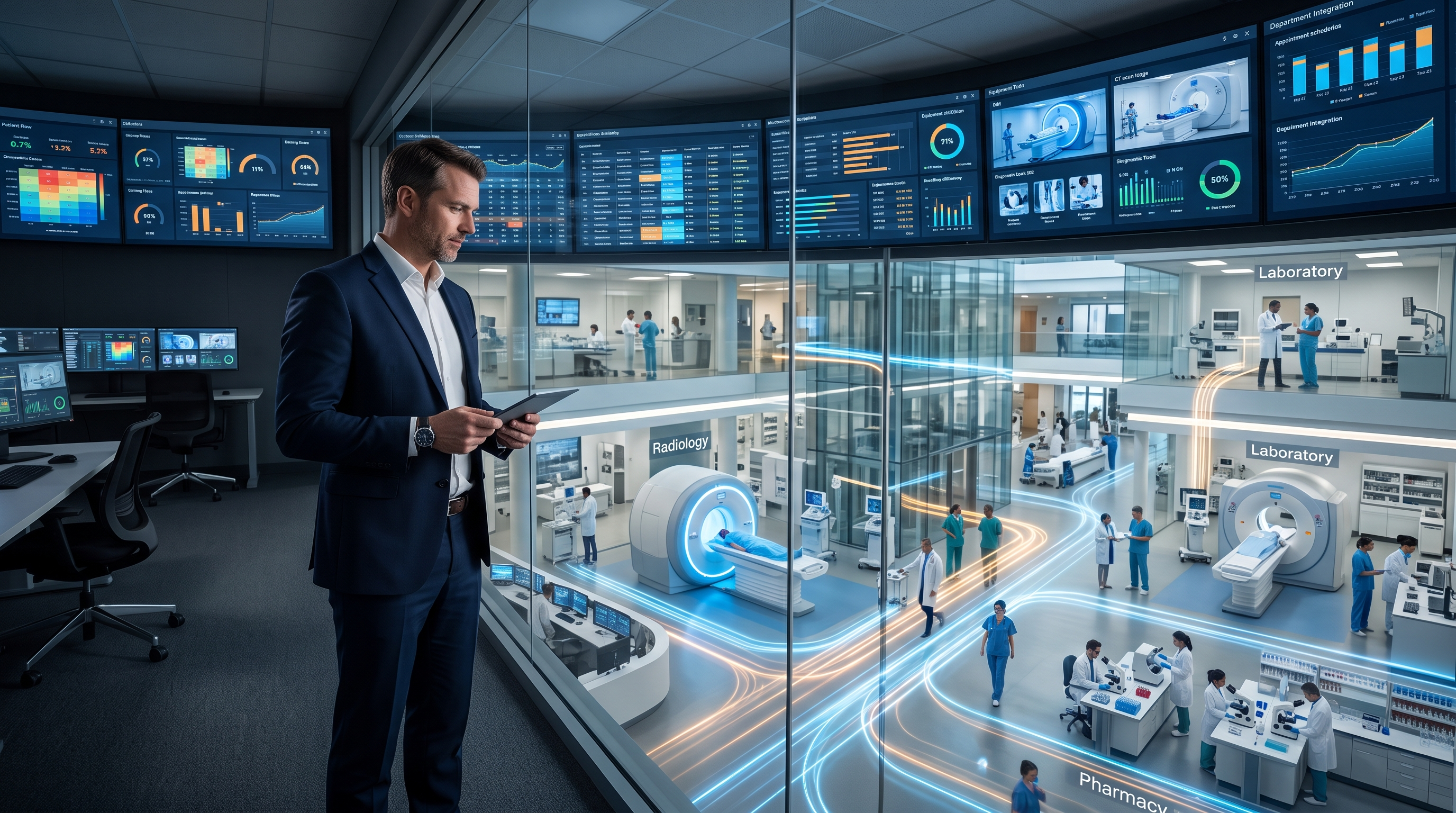
Healthcare organizations continuously invest in advanced medical technologies to improve patient care, increase diagnostic accuracy, and enhance operational performance. Modern MRI scanners, CT systems, robotic laboratories, digital radiology equipment, and automated diagnostic devices promise faster results and higher clinical efficiency.
Despite these significant investments, many hospitals continue to struggle with long patient waiting times, delayed diagnostic reports, inefficient administrative processes, and fragmented communication between departments.
This raises an important question:
If hospitals already have world-class medical equipment, why do they still operate slowly?
The answer is that technology alone does not create an efficient hospital.
Operational excellence depends on how information moves across the organization, how departments communicate, how workflows are managed, and how quickly decisions are made.
This is where a Hospital Information System (HIS) becomes the foundation of a truly digital hospital.
Rather than functioning as isolated technologies, advanced medical devices become significantly more valuable when integrated into a centralized digital ecosystem that supports every stage of patient care.
Advanced Equipment Does Not Automatically Improve Efficiency
One of the biggest misconceptions in healthcare is that purchasing expensive medical equipment automatically improves hospital performance.
In reality, even the fastest MRI scanner cannot eliminate delays if patient registration, scheduling, reporting, approvals, and communication remain inefficient.
Technology accelerates individual tasks.
Hospital operations determine how quickly those tasks create value.
Fragmented Systems Create Operational Bottlenecks
Many hospitals still operate with disconnected software solutions.
For example:
- Laboratory uses one system.
- Radiology uses another.
- Pharmacy operates independently.
- Billing relies on separate software.
- Patient records exist in multiple databases.
This fragmentation creates several problems:
- Duplicate data entry
- Communication delays
- Human errors
- Inconsistent patient information
- Slower decision-making
A Hospital Information System (HIS) eliminates these barriers by connecting every department within one integrated platform.
Manual Processes Continue to Slow Hospitals
Even hospitals equipped with advanced medical devices often continue relying on manual administrative procedures.
Examples include:
- Paper-based forms
- Manual approvals
- Phone calls between departments
- Printed laboratory requests
- Physical report delivery
These outdated processes consume valuable time and reduce productivity.
Workflow automation within a Hospital Information System (HIS) significantly reduces these inefficiencies.
Poor Appointment Scheduling
Sophisticated equipment cannot prevent overcrowding if appointment scheduling is poorly managed.
Common scheduling issues include:
- Overbooking
- Uneven patient distribution
- Long appointment gaps
- Missed appointments
- Lack of automated reminders
A Hospital Information System (HIS) optimizes appointment management by balancing patient demand with available resources.
Delayed Clinical Information
Fast diagnostic equipment provides little benefit if physicians must wait hours for reports.
Without integration:
- Laboratory results arrive late.
- Radiology reports require manual transfer.
- Physicians repeatedly request missing information.
Integrated Hospital Information Systems automatically deliver clinical results directly into electronic medical records, allowing physicians to make faster treatment decisions.
Inefficient Resource Allocation
Hospital performance depends not only on equipment but also on how resources are distributed.
Many organizations experience:
- Underutilized diagnostic devices
- Uneven staff allocation
- Department overcrowding
- Idle operating rooms
- Bed shortages
Healthcare analytics within a Hospital Information System identifies these inefficiencies and supports better operational planning.
The Importance of Performance Measurement
Hospitals cannot improve what they do not measure.
Modern healthcare organizations continuously monitor key performance indicators such as:
- Patient waiting times
- Equipment utilization rates
- Average diagnostic turnaround time
- Bed occupancy
- Physician productivity
- Appointment completion rates
- Emergency department throughput
Executive dashboards powered by Hospital Information Systems provide real-time visibility into these metrics.
How Hospital Information Systems (HIS) Transform Medical Technology
A Hospital Information System does much more than store patient information.
It acts as the digital backbone of the entire healthcare organization.
1. Department Integration
HIS connects registration, outpatient clinics, emergency services, laboratory, radiology, pharmacy, finance, and administration within a unified platform.
2. Workflow Automation
Routine administrative tasks become automated, reducing delays and eliminating unnecessary manual work.
3. Medical Equipment Integration
Modern diagnostic devices communicate directly with electronic medical records, ensuring immediate availability of clinical information.
4. Real-Time Analytics
Hospital executives gain continuous visibility into operational performance through intelligent dashboards and reporting systems.
5. Data-Driven Decision Making
Reliable operational data enables managers to identify bottlenecks, optimize resources, and improve patient flow.
Benefits of Combining Advanced Equipment with HIS
Hospitals that integrate advanced medical technology with a Hospital Information System experience numerous operational improvements.
These include:
- Shorter patient waiting times
- Faster diagnostic reporting
- Higher equipment utilization
- Improved staff productivity
- Better patient experience
- Reduced administrative workload
- Enhanced clinical collaboration
- Improved operational efficiency
- Stronger financial performance
- Higher patient satisfaction
Technology investments generate maximum value only when supported by integrated digital workflows.
Challenges During Digital Transformation
Implementing digital healthcare solutions may involve several challenges.
These include:
- Legacy system integration
- Staff resistance to change
- User training
- Data quality improvement
- Change management
However, hospitals that successfully overcome these challenges achieve substantial long-term operational and financial benefits.
A Smart Hospital Is Built on Information, Not Just Equipment
Leading healthcare organizations understand that becoming a smart hospital requires much more than purchasing advanced medical devices.
True digital transformation depends on:
- Connected information
- Automated workflows
- Integrated departments
- Real-time analytics
- Intelligent decision support
- Continuous operational optimization
The Hospital Information System serves as the central platform that connects people, technology, and processes into one efficient ecosystem.
Conclusion
Advanced medical equipment undoubtedly improves diagnostic capabilities and clinical outcomes. However, without efficient operational management, integrated workflows, and connected information systems, even the most sophisticated technology cannot eliminate delays or improve hospital efficiency.
A comprehensive Hospital Information System (HIS) transforms isolated technologies into a coordinated digital ecosystem where information flows seamlessly across departments, workflows become automated, and operational decisions are driven by real-time data.
Ultimately, the fastest hospitals are not necessarily those with the newest medical equipment—they are the hospitals that know how to integrate technology, people, and processes through a powerful Hospital Information System.