10 Signs It’s Time to Upgrade Your Hospital Management System to a Modern HIS Like MYELIN
Is your hospital management system becoming more of a burden than a help? If you notice any signs of inefficiency, it might be time to upgrade to a modern HIS like MYELIN. In this article, we present 10 key signs that indicate it’s time for a full digital transformation in your hospital.
Running a hospital in today’s fast-evolving healthcare environment requires more than just medical expertise it demands efficient digital systems that ensure smooth workflows, accurate data, and seamless patient care. Yet many hospitals still rely on outdated Hospital Information Systems (HIS) that were designed for a different era. These legacy systems often slow operations, create bottlenecks, increase errors, and limit a hospital’s ability to grow or adapt.
A modern HIS is no longer a luxury; it’s a foundational requirement for operational efficiency, patient satisfaction, and sustainable transformation. MYELIN, an advanced hospital management system, is designed to help hospitals overcome the limitations of outdated systems through full integration, powerful automation, and real-time insights.
Below are 10 clear signs that indicate it’s time to upgrade your hospital management system to a modern, efficient HIS like MYELIN.
1. Slow Patient Registration and Data Entry
If your front-desk team still struggles with delays during patient registration, check-in, or updating patient information, your HIS may no longer be capable of keeping up. Slow registration leads to long queues, higher patient dissatisfaction, and lost productivity.
A modern HIS like MYELIN streamlines these processes through automated data flows, easy-to-use interfaces, and fast search access—reducing wait times significantly.
2. Increasing Medical or Administrative Errors
When your system fails to synchronize data or delays updates, errors become inevitable—ranging from duplicated data to incorrect patient information or missing documents. These mistakes don’t just affect workflow; they can compromise patient safety.
MYELIN minimizes errors using centralized data, real-time updates, validation checks, and automated workflows that keep all departments aligned.
3. Lack of Integration Between Hospital Departments
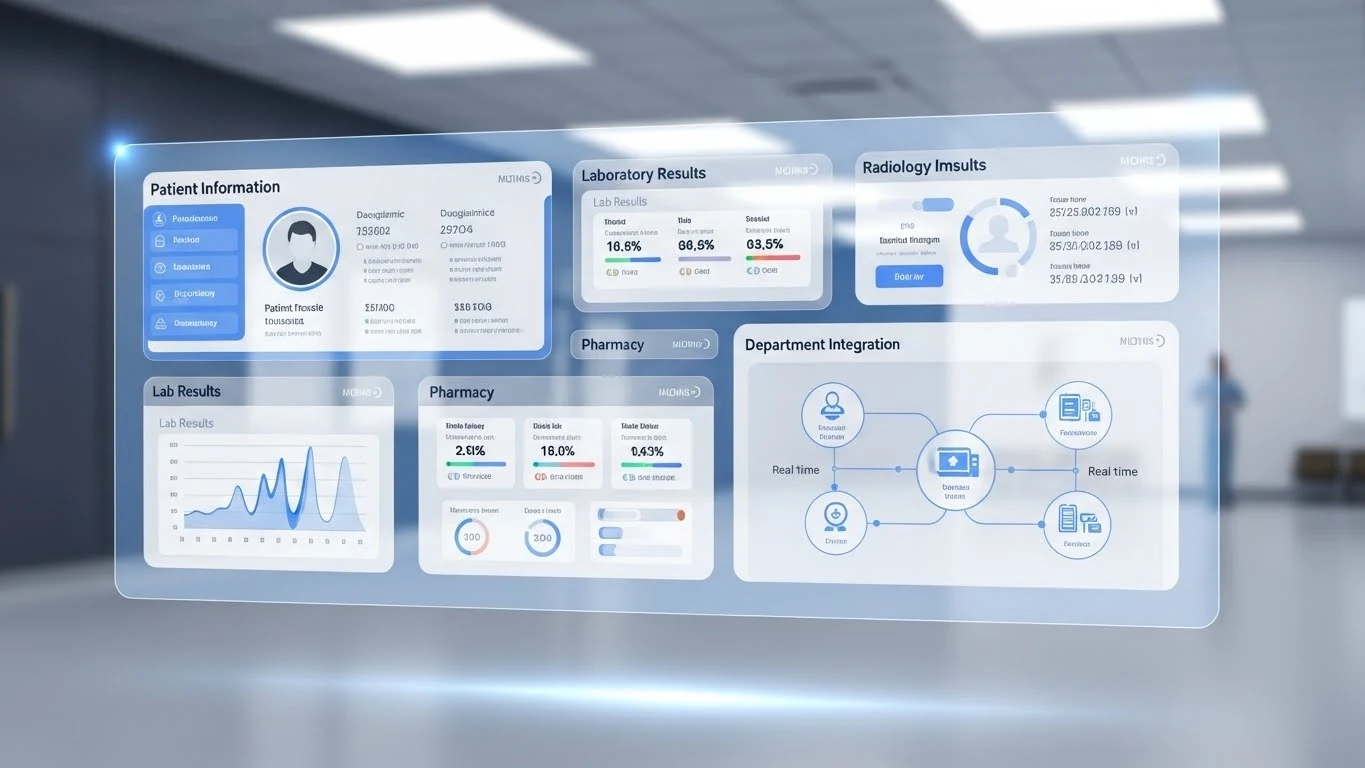
If your radiology department operates independently, your lab results arrive in PDFs by email, or your pharmacy uses standalone software, then integration is a major problem.
A modern HIS must connect:
- OPD
- IPD
- Laboratory
- Radiology
- Pharmacy
- Billing
- EMR
- Insurance
MYELIN provides full ecosystem integration, allowing every department to communicate seamlessly.
4. Difficulty Accessing Information and Reports
Decision-makers need actionable insights, not scattered spreadsheets or outdated dashboards. If your HIS struggles to give you real-time reports—whether financial, administrative, or clinical it’s holding your hospital back.
MYELIN enables advanced reporting and analytics with instant access to KPIs, performance indicators, and customized data dashboards.
5. Complicated User Interface and Staff Resistance
If hospital staff complain about the system being difficult, outdated, or confusing, it means the HIS is no longer meeting usability standards. A complicated interface increases training time and causes frequent errors.
With MYELIN’s intuitive and modern user experience, staff can work more efficiently with minimal training.
6. Weak or Delayed Technical Support
Hospitals operate 24/7. A system that breaks down during peak hours without quick support can cost the hospital time, money, and credibility.
MYELIN provides reliable and continuous support, frequent updates, and proactive monitoring to keep operations running smoothly.
7. Outdated or Non-Scalable System
Legacy HIS systems often struggle when the hospital expands new departments, more patients, or additional branches. If your system slows down, crashes, or cannot adapt to new workflows, scalability is a real issue.
MYELIN is built with scalability in mind, supporting multi-branch operations, cloud or on-premise hosting, and customizable modules.
8. Issues with Billing, Insurance, or Revenue Leakage
Billing errors, insurance claim delays, or inconsistent revenue cycles signal inadequate automation or weak financial controls.
MYELIN ensures accuracy with:
- Automated insurance workflows
- Smart pricing rules
- Unified billing dashboards
- Direct integration with clinical data
This reduces claim rejections and improves financial performance.
9. Limited Security and Compliance Features
Healthcare data is extremely sensitive. If your current HIS does not meet modern security standards like encryption, role-based access, audit logs, and backup protection, your facility is exposed to risks.
MYELIN includes advanced security protocols and complies with global healthcare standards to ensure data safety and continuity.
10. The Need for Complete Digital Transformation
If your hospital plans to adopt:
- Paperless workflows
- Full electronic medical records (EMR)
- Online appointments
- Telemedicine
- Automated operations
- Centralized patient journeys
Then your old system won’t support these advancements.
MYELIN enables a full digital transformation from clinical workflows to administrative automation helping hospitals operate smarter and faster.
Conclusion
When your hospital’s daily operations begin to suffer due to inefficiency, delays, or lack of integration, it’s a clear sign that your HIS is no longer meeting your needs. Upgrading to a modern solution like MYELIN can dramatically enhance patient care, streamline operations, reduce errors, and support long-term growth.
If you noticed any of these 10 signs in your hospital, now is the perfect time to consider switching to MYELIN and unlocking the full potential of digital healthcare management.