How Smart Hospital Systems Improve Emergency Response Speed
Rapid emergency response is a critical factor in saving lives and minimizing complications. As emergency departments face increasing pressure, traditional systems are no longer sufficient. Smart hospital systems now play a vital role in accelerating decision-making, streamlining workflows, and delivering real-time data that enables medical teams to respond faster and more accurately.
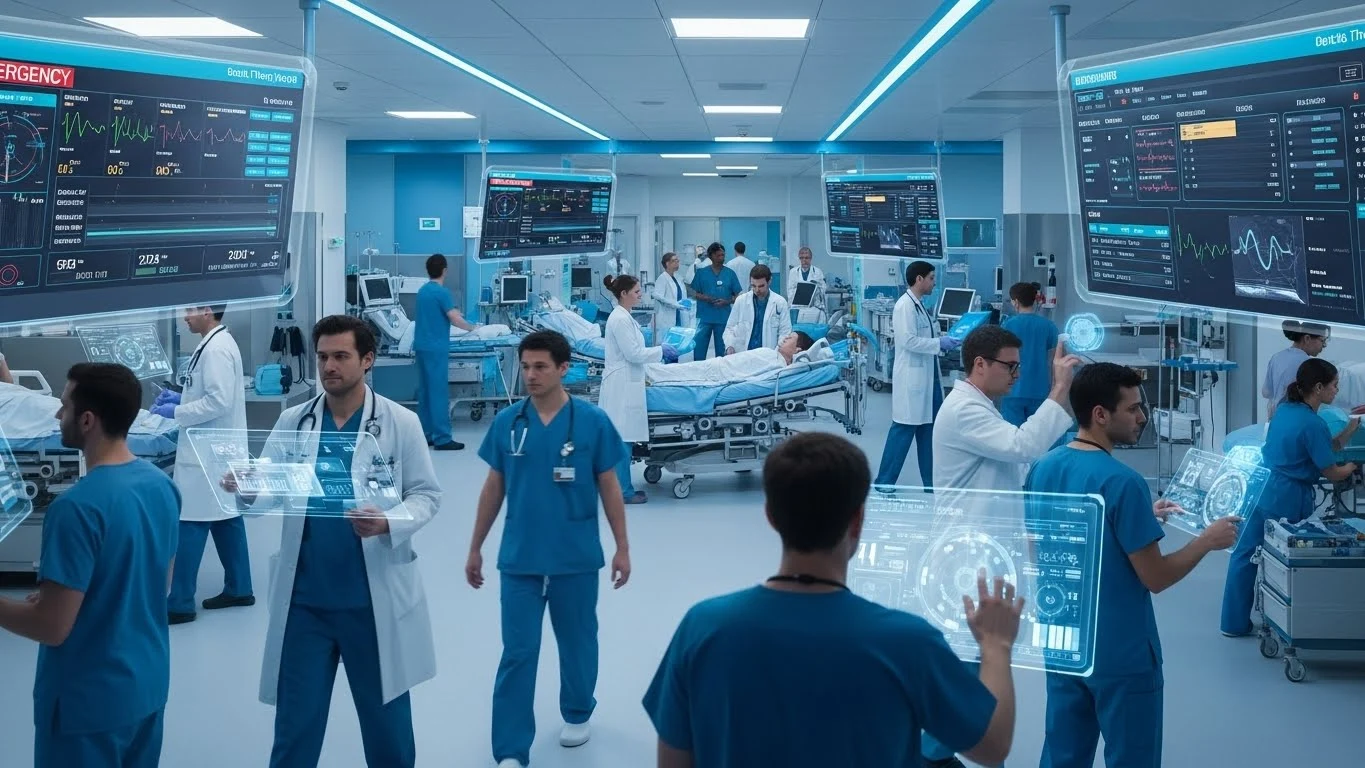
The speed of emergency response inside hospitals is a critical factor in saving lives and reducing medical complications that result from delays in handling critical cases. With the continuous increase in patient numbers and the growing pressure inside emergency departments, relying on traditional systems is no longer sufficient to meet the demands of modern healthcare.
This is where smart systems play a transformative role. They offer innovative solutions that help hospitals manage emergency situations more efficiently, improve care quality, and accelerate decision-making.
In this article, we will explore how smart systems enhance emergency response efficiency inside hospitals highlighting MYELIN as a powerful model for this transformation.
1. Challenges Hospitals Face in Emergency Response
Before understanding the role of smart systems, it is essential to recognize the major obstacles hospitals encounter, including:
- Slow patient registration due to paperwork or outdated systems
- Weak communication between medical teams inside and outside the emergency department
- Delayed laboratory or radiology results
- Lack of real-time visibility into resources such as available beds or medical equipment
- Difficulty in triaging cases based on priority within a short time
These challenges highlight the necessity of adopting advanced technological solutions.
2. How Smart Systems Accelerate Emergency Response
First: Real-Time Data and Automated Alerts
Smart systems allow real-time collection and updating of patient data, enabling medical teams to:
- Identify the patient’s condition immediately upon arrival
- Receive automated alerts when a patient’s condition deteriorates
- Continuously monitor vital signs
This significantly reduces the time lost between diagnosis and medical action.
Second: Smart Triage Systems
Rapid and accurate triage is one of the most important
factors in saving patients in emergency situations.
Smart systems use algorithms to determine case priority based on:
- Vital signs
- Medical history
- Severity level
This ensures that the right patient reaches the right physician at the right time.
Third: Full Integration Across Hospital Departments
Unlike traditional systems that operate in silos, smart systems connect:
- Emergency department
- Laboratory
- Radiology
- Pharmacy
- Medical records
- Operating rooms
This integration provides physicians with test results and medical images instantly, accelerating treatment decisions.
Fourth: Resource Tracking and Optimization
Hospitals often suffer from:
- Lack of available beds
- Difficulty locating essential devices during emergencies
- Shortage of nursing staff during peak hours
Smart systems provide real-time visibility into hospital resources, including:
- Available beds
- Usable medical equipment
- Staff locations
This minimizes search time and enables efficient resource redistribution.
Fifth: Enhanced Communication Between Medical Teams
Delays in information exchange often lead to delays in
treatment.
Smart systems ensure:
- Automatic delivery of physician instructions to nursing staff
- Instant updates to patient status across departments
- Immediate sharing of test results once available
This reduces errors and increases collaboration quality inside the hospital.
Sixth: Predictive Analytics Powered by Artificial Intelligence
With AI capabilities, smart systems can predict:
- Upcoming surges in emergency cases
- Potential shortages in resources at specific times
- The probability of deterioration in critical cases
These insights empower hospital management to make proactive decisions.
3. How MYELIN Enhances Emergency Response Speed
MYELIN, developed by CodeZone, is one of the most advanced systems supporting hospitals in managing emergencies and critical operations. It provides:
- Rapid patient registration through an intuitive interface
- Real-time monitoring of emergency cases
- Instant integration with laboratory, radiology, and pharmacy
- Accurate management of beds and hospital resources
- Instant reporting tools for fast decision-making
- Compliance with medical data security standards
MYELIN does not simply solve the problem it rebuilds the entire emergency workflow to make it smarter, faster, and more flexible.
Conclusion
Smart systems are not just technological tools; they are
essential components for improving healthcare quality inside
hospitals especially in emergency departments.
Adopting a modern system like MYELINcan be the difference between a delayed
response and a fast, accurate response that saves a patient’s life.